
Dr. Howell’s Daily Reflections
Everyday, Dr. Howell writes a reflection, a spiritual practice, an inquiry prompt, and a prayer.
To receive Dr. Howell’s reflections everyday in your inbox, please sign up for our mailing list using the form at the bottom of the page, and begin your journey into who God has made you to be.
Make peace with your ego and discover your true path today. The path to wholeness starts now!

What is Mine to Do? Part 7
What is mine to do—when the world feels loud, divided, and uncertain?
Not everything. Not what belongs to others. Just what is mine.
What is Mine to Do? Part 6
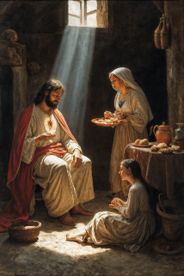
There is a saying that makes a lot of sense to me: Live and let live. The saying is old and comes from the Dutch proverb “Leven ende laten leven,” which was recorded as early as 1622 by Gerard de Malynes in his work, The Ancient Law-Merchant. It was later adopted into English as a principle of tolerance in 17th-century merchant philosophy. In general, it means to give others who are different from us a wide berth of acceptance because that creates harmony among us.

What is Mine to Do? Part 5
I cannot change the laws of a nation, but I can change the moment someone stands in front of me.
What is Mine to Do? Part 4
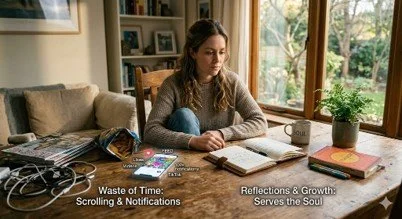
We all keep a “to-do” list. But what we place on that list deserves a closer look.

What is Mine to Do? Part 3
After graduate school, we settled in our new town and became part of a small community. One day, a well-known businessman, raising funds for a local charity, visited me at my office to ask for my donation. He told me the following: “This is a worthy cause, and if you contribute to this charity, it will help pay your 'civic rent.'” In the past, I had been only a student, not a professional in the work community, so I had no idea what “civic rent” meant.

What is Mine to Do? Part 2
How do we know what our specific purpose is? Some of us know it from childhood, others by the teen years, and others in young adulthood. It can be a struggle to find… especially when the ego has its ideas of what our purpose needs to be. I recall being in graduate school and dissatisfied with my course of studies. It was interesting, but it did not touch me at the deepest level.
What is Mine to Do? Part 1
The purpose of our life is not one goal; it is not about the end game or the bottom line. Our purpose is who we are. It is at the core of our identity, our spirituality, and our destiny. It is integral to the “why” of our existence. Our purpose is to express the aspect of the Divine we were created to express. If we live in this expression, we know deep down that we are on the right track. If we feel unaligned with our purpose, or if we do not know it, fragmentation and dissatisfaction linger. Many of us in that situation jump from one line of work, hobby, or relationship to another. Or if we settle on one, but do not really feel “at home” with it, we develop impostor syndrome—never feeling authentic.
Wholeness Part 7
“Therefore, you shall be perfect, as your heavenly Father is perfect.” —Matthew 5:48

Wholeness Part 6
The two things that once gave us that sense of wholeness when we were young children, our external holding environment and our natural connection to the soul, seem difficult to recover in adult life.

Wholeness Part 5
Where did our longing for wholeness begin?
Perhaps it began in our earliest days—when we and our caregivers formed a kind of holding environment. In that space, our needs were met. We were fed, protected, comforted, and—hopefully—loved. There was a quiet completeness in that experience. A kind of early wholeness. But as we grew, life became more complex. We encountered limits. We lacked certain abilities. We experienced rejection, disappointment, and comparison. We were not always understood, accepted, or affirmed. Slowly, we became aware of what we did not have… and what we believed we were not. And so, something transformed.

Wholeness Part 4
To realize our wholeness is to acknowledge our deficits as growing edges, and to genuinely embody our divine selves— all our qualities that make our soul a unique and divine being with a personal purpose. There are many ways we reconnect to our divinity. Many spiritual practices reveal our divine qualities and help us shift toward them.
Wholeness Part 3
Having everything we need, and being everything we are, is wholeness. But so many times, we do not realize that we have what we need and that we are complete as we are. So many times, we feel insufficient, damaged, and not enough. We feel unwhole. Without feeling whole, we are more susceptible to hopelessness. But the good news is we can rediscover our wholeness that was there all along and live from it. Our wholeness is a gift bestowed on us at our making—it never goes away. We can spend our entire lives unaware of it or forgetting it. Or we can embody and live from it.
Wholeness Part 2
The opposite of wholeness is fragmentation… what we often experience as brokenness. In Enneagram language, this is called disintegration: a movement away from our healthy center where our thoughts, emotions, and actions begin to unravel. We lose coherence. We lose balance. We lose ourselves.
Wholeness Part 1
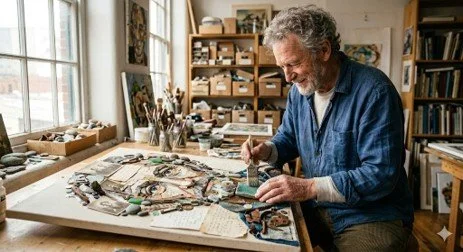
Welcome to this week’s daily Reflections on “Wholeness.”
Regardless of what happens, we are whole. Even during scarcity, sickness, conflict, and loss, we are whole and free. We may not feel whole, we may feel wounded and depleted. We may feel there is a gaping hole in us. But even with these challenges, the truth is we are whole.
Personality Part 7
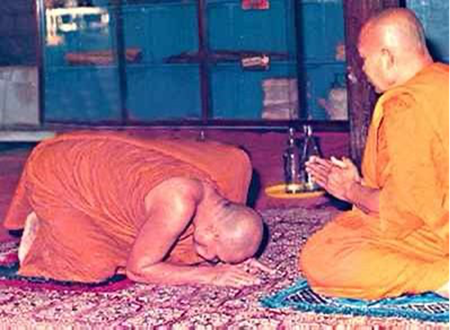
Question: What most helps our personality?
Answer: Anything that makes it bow to our soul.
Question: Why?
Answer: Because in bowing to our soul, we are our best self.
Personality Part 6
Are you “perfect?” ... The answer is yes, but few of us know it.
An amazing quality from our soul that shines through our personality is perfection. For the soul, perfection is wholeness, not flawlessness. Wholeness means the complete person which includes the fact that we are “under construction.”
Personality Part 5
Personality is made up of the traits and patterns of our surface self—the part of us that adapts, presents, and interacts with the world. But beneath this outer layer lives something far more essential: the soul. And the qualities of the soul form what we might call our soulality—our truest identity.

Personality Part 4
When we finally discover our true vocation, it is not our personality that brings us there. When a mother labors to bring new life into the world, her strength does not arise from personality. When we grieve the loss of someone we love, the depth of that sorrow does not come from personality. And when life presses us into crisis and we reach for the one person we can trust, it is not personality that guides our hand. In these moments, something much more profound takes over. We are drawn from the surface of who we appear to be, into the truth of who we are. We are most whole, most steady, and most real when we are living from the soul.