What is Mine to Do? Part 5
May 30, 2026
What Is Mine to Do? Part 5
I cannot change the laws of a nation, but I can change the moment someone stands in front of me.
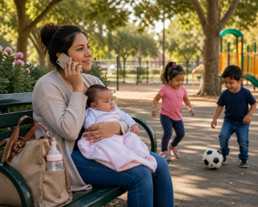
Yesterday, I was walking the dogs in our neighborhood park’s walking trail. A young mother holding her baby sat on a bench watching her other two small children play. As the trail went right by her bench, I could not help hearing that she was speaking softly in Spanish on her iPhone. As I approached, she stopped mid-sentence and looked down, almost as if she needed to disappear for a moment. It struck me. These are uneasy times. People in our community have been disappearing. Our trusted painter Juan is gone. Several friends have lost helpers and friends. People are afraid—afraid for themselves, for their families. You can feel it in the air—a quiet tightening. People pulling inward, trying to be invisible. And who could blame them?
I don’t know for sure why she fell silent when I passed. But I can imagine. Fear has a way of teaching people to shrink, to go unnoticed, to protect themselves in whatever ways they can. So, I did the only thing that was mine to do. I smiled and said, “Hola.” She looked up, smiled back, and returned to her conversation. Nothing dramatic. Nothing that would make the news. But something softened. A small bridge was built where there might have been a distance. A quiet acknowledgment: I see you. You belong here, too.
In the larger picture, I have little power. I cannot shape policy beyond my vote. I cannot sit at the tables where decisions are made about immigration, justice, or mercy. I cannot force understanding or compassion into hardened political minds. I alone cannot lead them into more creative ways for people who are here illegally, to be dealt with and cared for, instead of terrorized. However, I can choose how I meet the person in front of me. What is mine to do? It may seem small. But it is not insignificant.
When I see someone who may feel unseen, I make eye contact. I smile. I offer a greeting. I try to offer hospitality. In that simple act is a message that needs no translation: You are not alone. You are part of this human family.
I know, in some small way, what it feels like to be diminished. Years ago, in school in New England, my Southern accent marked me. Some people made jokes. One person even told me my accent was “not as bad” as someone else’s—as if I were something to be measured and ranked. It wasn’t cruelty on the scale others endure, but it was enough to leave a mark. Enough to make me feel, for a moment, like I was less than.
And yet, there were others—people who intentionally welcomed me exactly as I was. Their kindness stayed with me. It still does. Maybe that is one reason why I feel called to pass it on…. to offer, in the smallest of ways, what was once given to me: a sense of belonging. Sometimes the answer to “What is mine to do?” is not grand or world changing. Sometimes it is simply this: To see. To acknowledge. To include. And in doing so, to push against fear with something stronger: love. And to love is ours to do.
Spiritual practice and self-inquiry: How do you reach out to those who feel excluded or unseen? What small act is yours to do today?
Prayer:
Dear God, for every smile returned to mine, I am grateful. For in those moments, something sacred passes between us—a quiet exchange of love, dignity, and belonging. May I never underestimate the power of a simple kindness. Amen.