
Everyday, Dr. Howell writes a reflection, a spiritual practice, an inquiry prompt, and a prayer.
To receive Dr. Howell’s reflections everyday in your inbox, please sign up for our mailing list using the form at the bottom of the page, and begin your journey into who God has made you to be. Make peace with your ego and discover your true path today. The path to wholeness starts now!
Loving Ourselves and Others Part 4
Loving ourselves includes the art of self-forgiveness. If we keep holding every mistake and wrongdoing against ourselves, how can we live with self-acceptance and healthy self-love? If we hold so much against ourselves, how can we be free to genuinely love others? We cannot. Unforgiven actions gnaw at the conscience and burden us with guilt and shame.

Loving Ourselves and Others Part 3
Another interpretation of the concept of “Loving Ourselves” is that we love ourselves so that we can truly love others. This means practicing self-compassion, staying aware of our needs, and making sure they are met as we continue our healing journey. We actively love ourselves not only because we are cherished creations, but because we genuinely desire to be vital conduits of love to others.
Loving Ourselves and Others Part 2
The concept of “loving ourselves” can mean many things. At its healthiest, self-love means recognizing that we are worthy of care, dignity, forgiveness, and compassion. It lets us honor our own needs while staying deeply aware of others' needs.
Loving Ourselves and Others Part 1
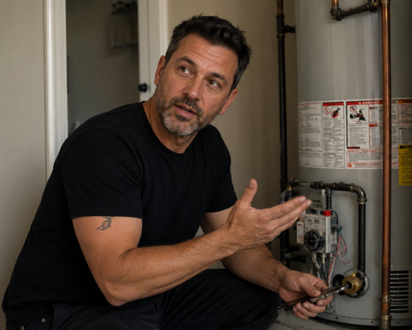
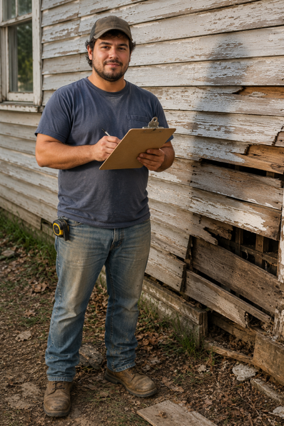
Today I was aware that a stranger felt uncomfortable in my presence. He had arrived at our house to do an estimate for some repair work. His youth and demeanor let me know that he was not experienced in meeting people and quoting estimates for his work. In fact, he had just begun his own business. Oh, how I identified with this young man. I recall vividly my first days and weeks in my work when I was “wet behind the ears” so to speak, and everyone I met could probably sense it.

Homecoming Part 7
Long before we have words to explain our deepest selves, our souls already show us what they love and need.
Homecoming Part 6
I walked up to the door of the mysterious house in the woods—the house I had seen countless times from afar but had never had the nerve to approach, climbed onto the porch, and rang the doorbell. I was curious about the mysterious people who lived there.

Homecoming Part 5
My soul’s home as a child included not only the yard, but the expansive woods just over the barbed wire fence. With our cocker spaniel Sparkle by my side, I’d bend the strands of prickly wire and climb through without a scrape. On the other side was another world—one of adventure, wonder, discovery, awe, freedom, risk, and even danger. I knew someone else owned those woods—there were metal “no trespassing” signs posted on several trees, and I found rabbit traps in several places. But to me, this land was my territory, my domain—my soul’s home, even if no one else knew it.
Homecoming Part 4
“You can exist without your soul,” Professor Lupin explains, but without it a person loses all sense of identity and becomes an empty shell.
—J. K. Rowling, Harry Potter and the Prisoner of Azkaban
Homecoming Part 3
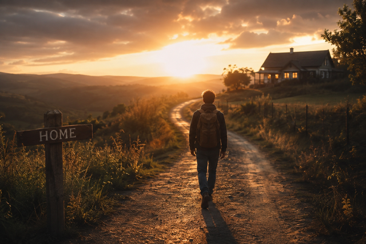
I was happy at college. I had friends and thrived on my courses and activities, but something was always missing. I longed for home. Truly, there was no place like home, the place of my truest identity—where, from the first day of my life, I was loved most completely and where, in turn, I loved most deeply. I didn't want to live at home, but I missed it. I wished that I could carry the feeling of home with me in my new life at school.
Homecoming Part 2
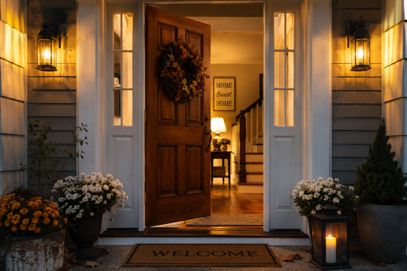
Homecoming does not always mean returning to the home one once knew. Sometimes the old home is gone, and in more ways than one. Sometimes that home is no longer safe, even if it once seemed so. In these instances, homecoming takes many forms.
Homecoming Part 1
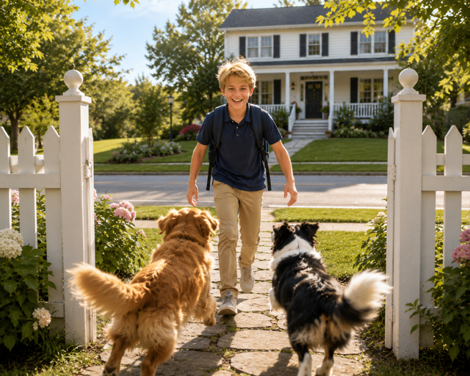
Today I was talking with a wonderful lady who told me a heartwarming story about her 12-year-old grandson, who has just conquered a battle with leukemia.
“Today was his first day of school,” she said. “He’s in the seventh grade this year. I asked him what his favorite part of the day was. And you know what he told me? He said, ‘Coming home.’”