Falling in Love Part 6
March 13, 2026
Falling in Love Part 6
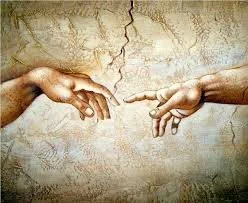
We do not fall in love with God just once. We fall in love again and again, each time letting go of the God we knew, to discover the God we are now ready for.
Loving the Divine is the most encompassing love we will ever know. It resembles the love between parent and child, yet it is far more vast. It is the love we receive from our Creator and the love we return. This love precedes thought, belief, and even identity.
The first falling in love with the Divine happens before memory. In utero, in infancy, and in the earliest moments of life, our union with God is absolute. It is blissful and undivided. There are no names for God and no ideas about God, because none are needed. There is only union. At that stage, we are not yet a separate self. We trust completely, and everything essential is there. At the beginning, we do not actually fall in love; there is no difference between us and the love we float in or embraced by.
As adults, we cannot describe this experience because it has no language. Even if we sense it faintly, what remains are impressions etched into the soul rather than memories stored in the mind. We were, quite literally, born in love with the Divine.
As life unfolds, we move through a series of seasons, each offering a different way of knowing God. Often, we must fall out of love with one understanding of God before another understanding can emerge. Between these seasons, there is sometimes a lonely stretch of not-knowing; this is a time when God may feel absent or unreachable. Some never find another image of God and therefore live without one. Some stay devoted to the God they feel most comfortable with. Others continue searching, drawn toward a vision of God that matches their expanding consciousness.
In early childhood, for many of us, God is introduced to us through our caregivers. This God is concrete and familiar. This God is usually an anthropomorphized version of the Divine. Loving, watchful, powerful, and often male, this God resembles a benevolent parent who controls the world and keeps order.
For many, growth requires falling out of love with this childlike image. We begin to sense that God must be larger than any picture we can imagine, greater than a wise old figure in the sky, and greater than control or punishment or reward.
Later, we may fall in love with a God who is not embodied at all, but who dwells in everything in nature, in people, and in the vastness of the universe itself. Our understanding expands, though we may still imagine God as a kind of cosmic manager, responsible for good while darker forces account for suffering. Still, we trust. Still, we love.
If we continue to question and to mature, even this God may fall away. What remains is the supreme Divine Mystery, which is beyond language, beyond gender, beyond form. Loving this God requires profound faith and deep trust. Here, certainty gives way to surrender. In this state of consciousness, compassion and grace naturally arise for all those who are loving God in other ways, at different stages.
Some reach a final season of falling in love—a return to oneness, a return to essence. Like the preverbal infant, there is unity again. But now it is joined with the wisdom earned through living. This is the consciousness of a realized soul.
Perhaps the most beautiful truth about falling in love with the Divine, at any stage of life, is trust. We trust because God remains our source in every season. The one in whom we confide… the one to whom we bring our gratitude and our grief, our remorse and our longing… the one who holds us, teaches us, and ultimately calls us home.
Spiritual practice: How do you love God in this season? Trace all the seasons and chart your spiritual progression throughout them all.
Self-inquiry: Why would you ever stay at one stage?
Prayer:
Dear God, Your love is always there. Amen