Self-Worth Part 7
January 31, 2026
Self-Worth Part 7
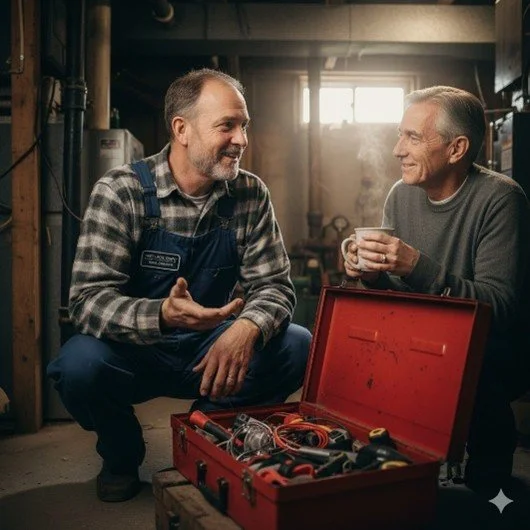
The man fixing my air conditioner looked up from his toolbox and said something I didn’t expect: “I love what I do. Even when I was a boy, I liked to help. It began with my finding beehives in trees, collecting the honey, and giving it to family and neighbors. Then, when I grew up, my interest turned to machines. I could have been a doctor or a nurse, but I chose to help people by fixing their air conditioning and heating. If they need cool air, I want to bring it, and if they need warmth, I want them to make sure they have it.”
At 42, he had discovered what eludes so many of us: his self-worth wasn’t dependent on status or salary, but it was rooted in purpose. His secret? Somewhere in his adult years, he returned to his purest self; yes, the little boy who loved who he was.
Yet this young man’s clarity is rare. Many of us struggle. This might sound harsh, but it is as much a part of life as our birth. As a young child, we left our comfort zone to become an ego. We got the message that we had to be someone other than ourselves. How’s that for laying the groundwork for poor self-worth?
Miraculously, most of us do not develop low self-esteem. Only 10-24 percent of us have chronic low self-esteem. Studies vary, but in general, they indicate that most of us (85 percent) have experienced low self-esteem at least a few times in our lives. But some 10-15 percent have unrelenting problems with self-worth, and that rises to 24 percent in the young adult population.
So, what saves most of us from developing chronic poor self-esteem? The answer is our will to survive and thrive. This intention is assimilated into our life force and infused with our purpose that is accomplished through our soul. Let me tell you what I mean with a story of mine.
My father was an excellent salesman who was very enthusiastic about his business. As a child, I’d awaken in the early morning, go into the kitchen, and see him sitting at the kitchen table with his cup of coffee, figuring his sales for the day on a paper napkin. I remember as if it were yesterday; he would put several spoonfuls of his coffee into my milk as he talked with me. And in the conversation, he would inevitably say something like. “Joe, I take this napkin with me every day and follow the plan I made in the morning. I love to make this happen.” In reflection, I recognize this was my dad’s divine purpose expressing itself. He was literally pouring himself into me, giving me that which he revered and valued. Though his was an unconscious action, it conveyed to me something very profound even though I had no words for it.
For most of us, our life force and purpose are powerful motivators of high self-esteem. As we know, affirmation from others helps us believe in ourselves. Yet there is another motivator: we are woven into a family that nurtured us into being, and, in turn, as part of that family, we nurtured our children. You and I are an essential link of a living structure that preceded us, made us, and that will go on after us. Each generation is a link in the legacy of purpose. However, the greatest motivator in believing in ourselves is the connection to divine unconditional love. That is the only connection that is never truly lost and cannot be taken away.
The young man who fixed my air-conditioning unit has four little children. They will inherit the know-how to believe in themselves. This is a gift of God.
Spiritual practice: What are some ways you connect to divine unconditional love?
Self-inquiry: How would you characterize your link in your generation’s legacy of purpose?
Prayer:
Dear God, For the spoonfulls of coffee, I give you thanks. Amen