
Dr. Howell’s Reflections
Everyday, Dr. Howell writes a reflection, inquiry prompt, and a prayer.
To receive Dr. Howell’s reflections everyday in your inbox, please sign up for our mailing list using the form at the bottom of the page, and begin your journey into who God has made you to be.
Make peace with your ego and discover your true path today. The path to wholeness starts now!
You Live and Learn Part 3
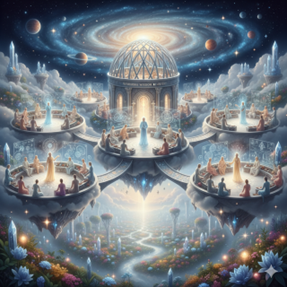
I learn something new every day. Many of those lessons are not pleasant, yet each one brings me into a deeper fullness of my humanity. We are all on a lifelong journey toward self-actualization, the unfolding of our true selves. But this “apex” of our identity is not a fixed peak. It continues to expand as we grow in consciousness, drawing us ever upward.

You Live and Learn Part 2
One of the first things we ever learn in life is trust. Our first course in trust might be called Nourishment 101, and we took it as infants. From our first breath, nourishment was essential, but we were helpless to provide it for ourselves. Our caretakers held our survival in their hands. We had to learn to trust them for food, warmth, love, and care. And food was the very first practical lesson. The feeding process itself became the laboratory for Trust 101.

You Live and Learn Part 1
We invite you to join us for this week’s series of Daily Reflections: “You Live and Learn.”
The old saying “You live and learn” has been around for centuries, appearing in English writings as far back as the 1500s. Its meaning is timeless: we gain wisdom and understanding through life’s experiences, especially the difficult or surprising ones. George Gascoigne wrote in 1576 in his play, “The Glass Government,” that life itself is a kind of school, and according to our teachers, our mistakes become lessons.


Meditation Part 6
During the first part of meditation, many of us experience constant mind chatter—continuous random or fixated thoughts about “what is next?”, “what if?” Business and personal matters fly in front of our eyes, This phenomenon is directly related to the ego’s desire to perpetuate the “story of me.”
Meditation Part 5
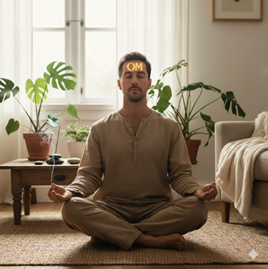
Many people may think it “weird” to chant the word “Om” before entering a meditation. But the ancient Hindu and Buddhist practice of chanting this curious word has a method in its madness. According to spiritual teachers down through the ages, “Om” elicits the energy of the universe by vibrating our bodies with the basic vibration of all creation.

Meditation Part 4
The human organism, like all of nature, seeks homeostatic balance. When one aspect is out of order, the other aspects prop it up until it can function normally again. This phenomenon occurs in all of nature. In his book, The Hidden Life of Trees, biological scientist Stephen Wohlleben points out that a stand of trees whose roots are inter-connected become an organism unto themselves. And when one of those trees is ill, the others send extra nutrients to the ailing tree until it recovers. The trees are individual parts of a common life, shared by each of them. All the parts work in concert to compensate for any lack or deficit in the community.

Happy Thanksgiving
Gratefulness is one of the most cherished qualities of the soul. It arises from an awareness that we are blessed. Something has entered our lives that we could not have given ourselves. Gratitude awakens when we recognize that without that gift, we would be at a loss.

Meditation Part 3
There are many levels of the meditative state just as there are many levels of dream states. The deeper we are into the rapid eye movement (REM) stage of sleep, the more vivid and intense are our dreams. Similarly, the deeper we go in meditation, the freer we become from the monkey mind, and the more satisfying is the meditation.

Meditation Part 2
Once we close our eyes and follow our breath, we have virtually shut out the outer world. As we “go down into the deep of our own being,” we relinquish to the Higher Power. And because we have surrendered to the Divine, our meditative experience is like being on a guided tour.
Meditation Part 1
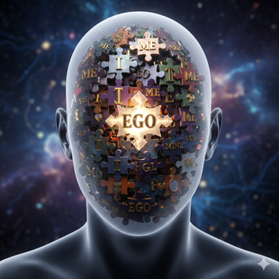
A hypnotist takes us into a trance by inviting us to focus on one thing such as her voice or a pendulum she swings before our eyes. In a trance, the mind is “blank,” and therefore highly suggestible. In a trance state the ego is not engaged. Therefore, the mind is more likely to think or do as the hypnotist instructs. The person under hypnosis has a new reality.

Heartstrings Part 7
I first became aware of my heartstrings when I saw the film Old Yeller.
It was about a wonderful dog that grew in my heart as I watched the movie. The boy reminded me of myself and my dog, Sparkle. Oh, the hikes in the woods, the walks in the neighborhood and catching sand crabs on the beach! Travis was the boy in Old Yeller. He, too, considered his dog his friend and companion.

Heartstrings Part 6
Just think about why a child or an animal pulls on our heartstrings: we all have an innocent and helpless part of ourselves and identify with that helpless child or animal on some deep level. It could be an insurmountable struggle that we must cope with or a deficiency for which we have spent years compensating. It could be a long-held resentment or rage. It could be a loss or rejection. It could be an inability to feel joy, but we do not know why. It could be that we never found the love we had hoped for.

Heartstrings Part 5
Some Enneagram students who are not in the heart center find themselves strongly identifying with the heart center without understanding why. This is because we all have another ego type in the other two centers. For example, an Ego Type Five in the Mind Center might have Type Two as their strongest identification in the Heart Center, and perhaps a Nine, Eight, or One as their strongest identification in the Body Center.

Heartstrings Part 4
The personality types in the Heart Center are the Two, Three, and Four. These types share a profound disconnection from their own lovability.

Heartstrings Part 3
What last pulled your heartstrings? What broke through the wall that stands between us and our emotions? We all have such a wall. It is necessary in this world, where sad and heart-wrenching things happen all the time. The wall protects us from breaking down at the drop of a hat and from being emotionally incapacitated over and over in any given day. But the wall can thicken and become a barrier to our souls instead of a protection. Or the wall can be breached, flooding us with emotions.

Heartstrings Part 2
Why do we feel such empathy when we see injustice, pain, or human need? Because our heart's center of intelligence instantly tells us that something is not right. Something has gone against the human spirit or our sense of decency, sense of morality, fairness, or human dignity. The heart does not stop to analyze; it responds. In harmony with the body’s instinctive center, it brings tears, compassion, or even the urge to act. In this way, our heartstrings become part of our moral compass.

Heartstrings Part 1
Welcome to this series of Daily Reflections on Heart Strings.
You’ve likely heard this phrase used in tender moments:
“That movie pulled on my heartstrings.”
“Whenever you say you love me, it tugs on my heartstrings.”
“I saw that little puppy in the pet store, and she stirred my heartstrings.”
“When you told me of the family’s plight, it touched my heartstrings.”