Anticipation and Disappointment Part 3
February 17, 2026
Anticipation and Disappointment Part 3
What if disappointment is not a failure of the spiritual life, but the moment just before surrender?
All week, we have reflected on the ego that overshadows the soul. Yet there is another possibility: an ego that no longer competes with the soul but consciously serves it. In this state, the ego is no longer the captain of the ship. It has yielded leadership. Soul and ego enter a syntonic relationship of deep alignment, in which their intentions no longer differ.
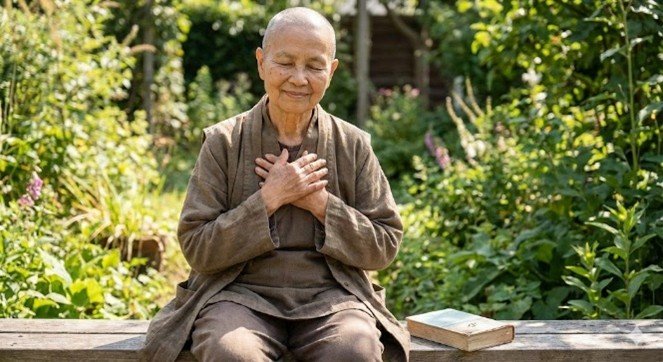
This yielding is what we call surrender or relinquishment. For those walking a spiritual path, the work is not to avoid disappointment, but to shorten the distance between disappointment and the recognition of truth. The shorter that distance becomes, the more freely the soul can lead.
The word surrender itself reveals the process. It comes from the French surrendre, meaning “to give over” or “to yield.” It joins two roots: sur, meaning “over,” and rendre, meaning “to give back.” To surrender, then, is to give back what was never meant to be owned—the illusion of control.
Most of the time, the ego does not surrender all at once. It learns slowly, case by case, day by day, by submitting its habitual responses to the wisdom of the soul. Over time, the ego yields enough that it reaches a critical mass of surrender, and a quiet flip occurs. The soul becomes the leader.
What happens to the ego after this flip? It is not erased. Nothing essential is lost. The ego’s long-practiced skills, such as planning, organizing, and exerting effort, are repurposed. What once served the ego’s narrative now serves the life of the soul. The ego becomes the instrument through which the soul moves in the world.
This surrender can occur suddenly, as it did for Paul on the road to Damascus, or gradually, through many small relinquishments. Paul’s conversion offers a vivid image of the ego’s change in function. Before his conversion, his energy was devoted to persecuting Christians. Afterward, that same forcefulness was redirected toward love, service, and the spread of the Gospel.
Paul later reflected on his state of consciousness before his conversion: “On the authority of the chief priests I put many of the Lord’s people in prison… In furious rage I persecuted them even to foreign cities.” (Acts 26:10–11)
That very energy, once driven by fear and certainty, became the power behind his preaching, his journeys, his endurance under persecution, and his letters to the early churches. Most of us will not experience such dramatic conversions. Yet what Paul and countless saints share is available to all of us: the willingness to follow the soul when we realize that the ego’s way no longer brings life.
Spiritual practice: Answer this question in your journal. What if all your egoic energy went into service of your soul? Keep asking the question, and listen to your answers, until you reach a point of greater insight from where you started the process.
Self-inquiry: Why would you want to surrender to your soul?
Prayer:
Dear God, I want to surrender all. It is only You who can bring me to that stage. Amen