Seeing Things Part 3
May 4, 2025
Seeing Things Part 3
Perception is vital in most circumstances or relationships. For example, if we perceive a situation based on false assumptions, we can make the wrong decision. When we are under stress, often our assumptions are affected by our ego’s fixation, passion, avoidance, or trap, all of which distort reality. But when we are in a healthy and conscious state, our assumptions tend to be free from our fixations, avoidances, etc.
Yes, how we see the world makes all the difference. As we know, regardless of how we look at reality, the facts of a situation are the facts. Yet, how we interpret those facts affects our attitude and behavior. And our behavior and attitude affect everything. So, in the end, our perceptions shape our lives.
For example, our lives are affected by our overall perception of optimism or pessimism.
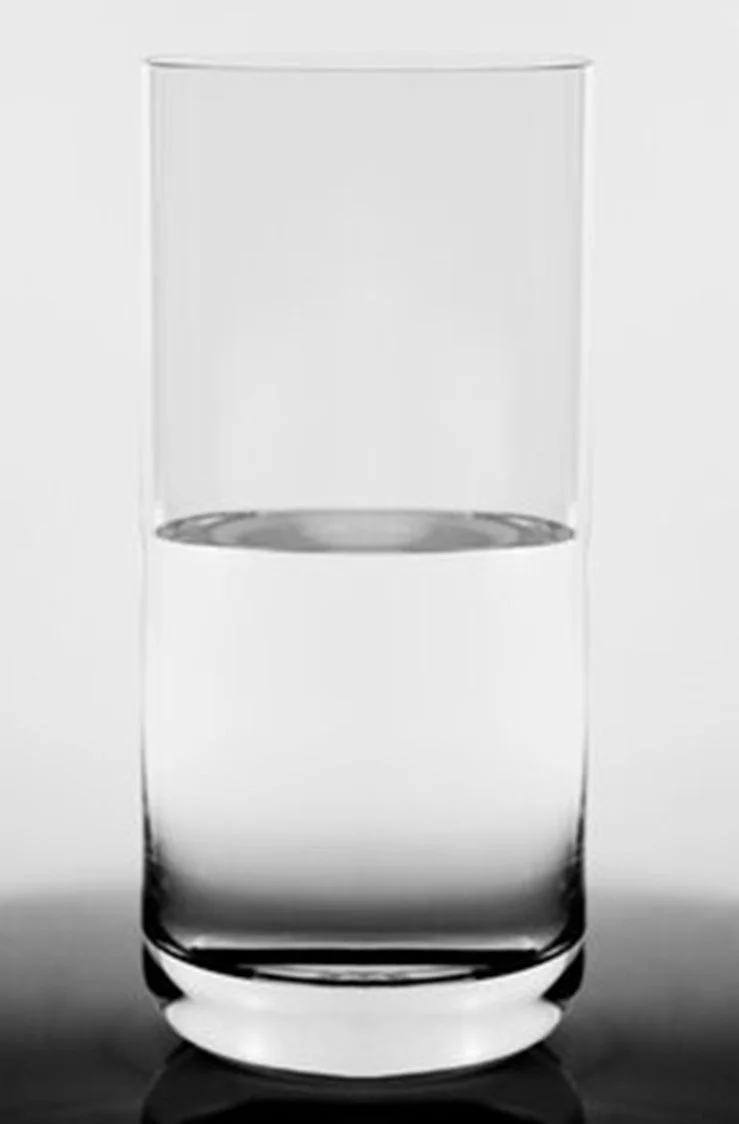
Do you tend to see the glass as empty or half-full? If you see it as half empty, does that perception serve you? Does seeing things in readiness for their negative possibilities make you feel more secure? Does it force a mentality of scarcity? Or perhaps seeing the glass half empty gives you a more grounded and realistic picture.
If you see the glass as half-full, does that serve you? Does seeing positive possibilities give you optimism and energy? Does focusing on the positives trigger creativity and ideas that make for an even more favorable outcome? Or does seeing the glass half full promote denial and blind faith? Or does it root you in a mentality of abundance?
Neurobiologist David Hecht (University College, London) found that the neurophysiology associated with optimism (half-full glass) and pessimism (half-empty glass) are associated with two different cerebral hemispheres. The Left Hemisphere mediates sensitivities to the positive aspects of a relationship or situation, high self-esteem, and belief that the future will be bright. The Right Hemisphere focuses on the negative side of a relationship or situation, low self-esteem, and a gloomy view of the future.
According to research, the best strategy is to balance both hemispheres. But to do this, we must develop the one in us, that is the less-developed. Doing this helps create a balanced sense of reality without being overly optimistic or pessimistic. Our false selves tend to conduct excessively pessimistic or overly optimistic attentions, depending on our biases. Therefore, the more we shift from the false self to the true self, we are afforded more equanimity and less volatility.
Spiritual Practice: Try discerning your proclivity toward optimism or pessimism. Is there a difference between the outlook of your ego and your soul? In light of your spiritual life, how much do you value equanimity?
Dear God,
Regardless of the truth, please give me peace of heart. Amen