Passing the Peace Part 3
July 2, 2026
The Semai of Malaysia
Passing the Peace Part 3
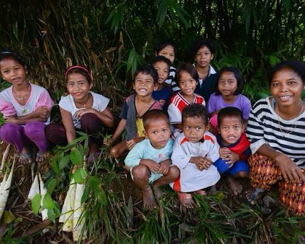
There are societies and groups in our world that have become known for living in peace. The Semai people of Malaysia are considered one of the most peaceful societies ever studied. Violence is extraordinarily rare, and conflict is resolved through calm discussion rather than aggression. Neighboring indigenous groups such as the Batek and Chewong share similar values, rejecting coercion, domination, and physical force.
The Piaroa people of Venezuela and Colombia likewise reject violence and hierarchy, choosing leadership rooted in wisdom rather than power. The Quakers, formally known as the Religious Society of Friends, have long embraced a “Peace Testimony,” refusing to take part in war and advocating nonviolence. Even nations such as Switzerland and several Nordic countries have demonstrated long-standing commitments to peace and diplomacy rather than military aggression.
What makes groups or societies peaceful? Several common threads emerge.
There is usually an overarching identity that binds people together despite their differences. Shared belonging creates tolerance.
There is also deep interconnectedness. People recognize that survival depends upon one another—through ecology, trade, security, or mutual support. The realization grows that no one truly survives alone.
Peaceful societies also cultivate norms that reward cooperation instead of aggression. Their values, symbols, and stories honor reconciliation more than domination. Their language—especially through leadership and media—encourages understanding rather than fear and hostility. And finally, peace requires leaders willing to model restraint, humility, and wisdom. These examples show us that collective and individual consciousness is not constrained to the socio-economically advantaged or to the first world. Consciousness and peace are available to all.
Yet how do we create such peace in our own society? We cannot simply legislate peacefulness into existence. Jesus understood this deeply. Many leaders throughout history have feared peace because peace can appear vulnerable. Aggression often masquerades as strength.
But Jesus approached peace differently. He began not with governments, but with the human heart. He offered peace first to the individual soul. And even more astonishing, He offered peace as a gift.
How many children today are raised with the understanding that they may receive the peace of God— not merely the absence of conflict, but an inner stillness rooted in God’s presence? If enough people treasured such peace, would our collective life begin to value peace differently as well? Has this gift slowly faded from our cultural memory?
Jesus said, “Peace I leave with you; my peace I give unto you. I do not give to you as the world gives.”
The world’s peace often depends upon circumstance, power, control, or temporary agreement. Christ’s peace is different. It remains even amid uncertainty, suffering, or fear. It is an inward steadiness that the world cannot manufacture and cannot take away.
Spiritual Practice
What value do you place on the peace Christ offers? How would you describe that peace? Could a society eventually become shaped by individuals who truly carry such peace within themselves? Is it possible for our country to be guided by the principles of peace? Write your answers to these questions and see where you stand.
Inquiry
Why does Christ say that the peace He gives is not the same as the peace the world gives?
Prayer
Dear God, for ours to become a nation of both individual and collective peace, I pray. Help me to carry Your peace into every relationship, every conversation, and every place I enter. May I not merely speak of peace but become peace for others.
Amen.