The Nodes of Life Part 5
May 20, 2025
The Nodes of Life Part 5
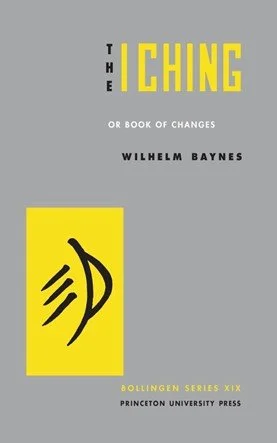
In the spiritual life, we sometimes reach points of confusion and cannot determine our next step. The Chinese book I Ching, a 2000-year-old “book of changes,” is used for spiritual discernment. Psychologist and philosopher Carl Jung consulted the I Ching at times of uncertainty and wrote the foreword to one of its Western publications.
The I Ching is not magic, but its guidance for us depends on our interaction, our intention, the question we ask, and the “roll of the dice,” or mystery. In consulting the I Ching about a circumstance or relationship in our lives, we first write our question, then throw three coins (or initially yarrow sticks) that determine a hexagram, which refers to a page number in the book. When we read that page, three things are given — a general assessment of the situation at hand, an assessment of where the problem is going, and how it affects the individual, family, and community. The assessments of the situation are written metaphors which use acts of nature to describe what’s going on, and how things will best be resolved. For example, the description of a calm pond translates into serenity about a situation. A volcano may mean that something is going to blow. It is incredible how the readings coincide with and speak to the question asked.
Of course, the specific situation cannot be addressed. It’s the underlying question that is addressed. In essence, the book gives a reading of how things will most likely go regarding the basic human question underlying the one asked. The book’s effectiveness as a guide is in the hands of fate. All of this is based on the law of synchronicity.
The term “synchronicity” was coined by Carl Jung, who understood what the ancient Chinese and other ancients had already realized: there is a strong relationship between events, and many coincidences occur beyond all odds. The events do not cause or trigger one another but are parallel occurrences that are uncannily related. This phenomenon indicates that there’s a deeper fundamental pattern of events beyond mere coincidence. The ancient I Ching relies on synchronicity. It depends on the sincerity of the “believer” and the nature of their question. It’s readings are amazingly suited to the question at hand.
As I Ching illustrates, the natural world gives us answers through analogies of our lives. We may think it “woo woo,” but when nature reveals something to us, it comes from our ability to read divine messages that are there all along. To read these answers and to receive the guidance offered, our spirits are transparent to the natural world and to the omniscient. In other words, divine intelligence always communicates with us, but if we are distracted by our ego’s agenda, we cannot see what is evident in our soul’s eyes and ears. “As above, so below”.
Spiritual practice: What is your current question regarding this node of your life? When you are settled and receptive, ask your question in the surroundings of nature. What impressions do you receive from the Divine?
Self-Inquiry: Why do you think Jesus used examples of the natural world in the parables?
Dear God,
Please grant me the peace to perceive your wisdom in the wind, the trees, the clouds, the crops, and the waves. Please show me your map in the veins of the leaf. Amen