Entering the Divine Flow Part 1
October 6, 2026
You are invited to join us in this week’s Daily Reflections on the subject of “Entering Divine Flow.”
Some of the most meaningful spiritual practices are not found in well-known books or established manuals. They are personal practices—developed by individuals for the particular needs of their spiritual journeys.
When people share these practices, it is often through conversation with trusted friends. Many others remain known only to the people who practice them. This week, we will reflect on several personal spiritual practices that dear souls have generously shared with me over the years.
One such practice, shared with me by my friend and ICB graduate, the Rev. Gary Baldwin, is a personalized form of tapping. Tapping involves gently touching or tapping particular places on the body while focusing upon an emotion, concern, prayer, or intention.
The modern practice grew out of ideas associated with Eastern acupuncture and acupressure. During the 1960s, chiropractor George Goodheart began using pressure or tapping on traditional acupuncture points rather than puncturing the skin with needles. This worked. In the 1970s, psychiatrist John Diamond combined the tapping of these points with affirmations.
During the 1980s, psychologist Roger Callahan developed Thought Field Therapy, which used different tapping sequences for particular emotional difficulties. In the 1990s, Gary Craig simplified Callahan’s method into what became known as Emotional Freedom Techniques, or EFT. Instead of determining a different sequence for every emotion, Craig taught people to tap the same nine accessible points while naming and attending to their distress. This technique worked and got the attention of many medically oriented professionals.
Today, some people use Emotional Freedom Techniques (EFT) as a complementary practice for anxiety, cravings, phobias, pain, depression, and trauma. Others have adapted tapping for relaxation, clarity, prayer, and spiritual discernment.
The nine tapping points are:
Side of the hand: Tap the fleshy outer edge of either hand, just below the little finger. This is sometimes called the “karate-chop point.”
Eyebrow: Tap where the eyebrow begins, near the bridge of the nose.
Side of the eye: Tap the bone beside the outer corner of the eye—not the eyeball.
Under the eye: Tap the bone directly beneath the eye.
Under the nose: Tap between the bottom of the nose and the upper lip.
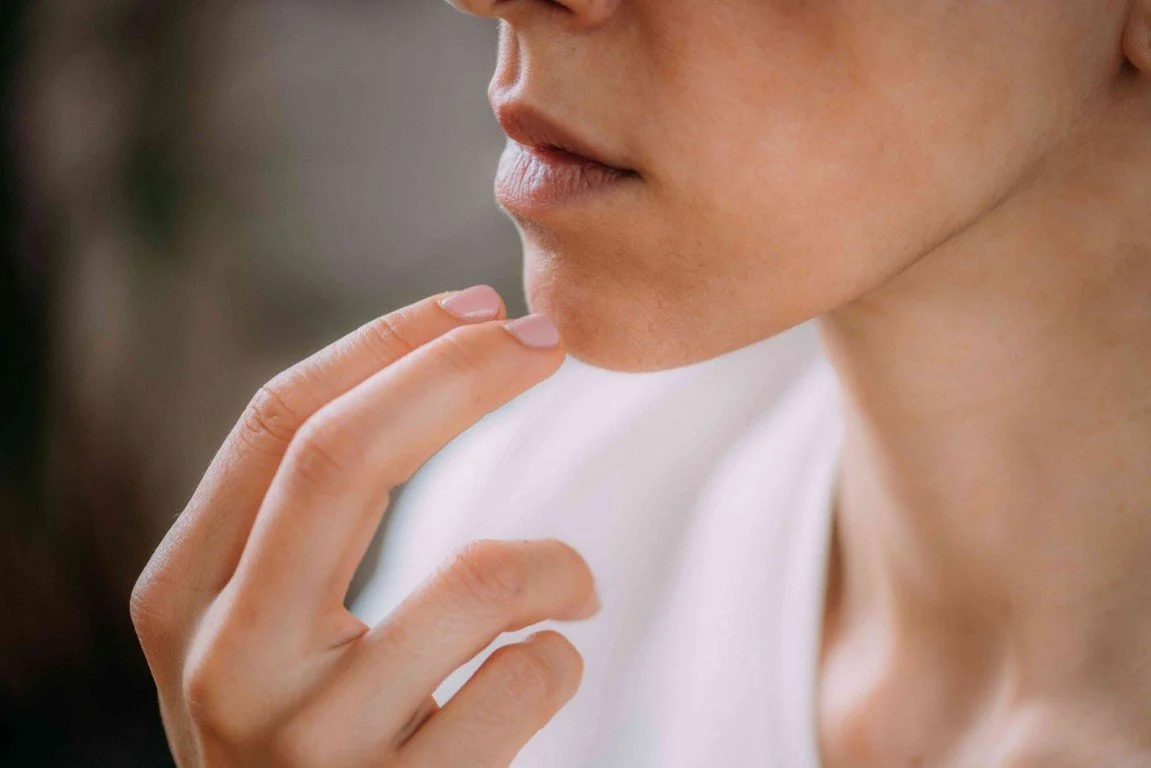
Chin: Tap the crease between the lower lip and the chin.
Collarbone: Tap just below and slightly outward from where the collarbones meet.
Under the arm: Tap about four inches below the armpit, around the level of the lower ribs.
Top of the head: Tap gently at the center of the crown.
Tap each point gently five to seven times with two or three fingertips. Either side of the body—or both sides—may be used.
The Cleveland Clinic describes EFT as a reasonable complementary practice that may help calm the nervous system and reduce anxiety and other forms of distress. However, tapping should not be regarded as a substitute for appropriate medical or psychological care.
I have a friend who uses tapping primarily as a spiritual practice for relaxation and focus. It helps her enter a different state of consciousness as she prepares for prayer and meditation. For her, tapping quiets the distractions that interrupt contemplation and hinder her awareness of the Divine. Tapping on these parts of the body quickly takes her into a contemplative state, in which she can more readily do spiritual work.
Tapping is a body-centered spiritual practice. Rather than struggling mentally to control every thought, we allow its gentle rhythm to settle our body. As our body becomes quiet, our mind loosens its grip. Our attention clears, our heart can more readily open, and we enter divine flow.
Inquiry
What circumstance or state of being would call you to give tapping a try?
Prayer
Dear God, May even our bodies become instruments of Your divine flow.
Amen