

Accidents Part 6
October 25, 2026
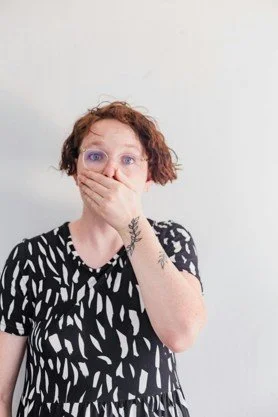
Photo by Sincerely Media
Some accidents are not entirely accidental; they are known as Freudian slips—our behavior driven by unconscious intentions. The psychological term for this phenomenon of our unconscious life is parapraxis, the Greek roots of which are para (beside or beyond), and praxis (a doing or action).
The subconscious is a storehouse of information gathered from all types of learning—reading, conversation, and observation of life itself. It is also a repository for our emotional responses to experiences. Some stored information in our subconscious is accessible and can be retrieved, whereas some is suppressed and is not readily available to our conscious life.
The thoughts and feelings stored in our subconscious that are not readily available to us are still valid parts of us and may profoundly affect our conscious life, even if we are unaware of them. Many of these ideas and thoughts are shrouded in fear, shame, and guilt—or they may be inherited ideas and desires we are disconnected from and therefore cannot easily embody. Called our shadow, these repressed parts of ourselves also contain neutral or positive aspects we are unaware of.
Then there are the things in our preconscious that we are aware of and can retrieve but that we keep under wraps for various reasons. For instance, we may not like someone in our life but dare not voice that opinion. We may have interests that we do not discuss because others would not easily accept them. We know these things on a subterranean level, but do not live in conscious awareness of them.
When we speak or act in ways that unintentionally reveal material from our subconscious or preconscious, that is called a Freudian slip (a parapraxis). It is a very human thing to do. It can happen in our speech, writing, and behavior. Basically, hidden sentiments, prejudices, hatreds, desires, and ideas we may not even be aware of somehow make it into our language or actions. For example, Evan, the city’s youth athletic sports director, was a thinker and always thought of himself as above stereotyping cultures, genders, or races. But in a speech before his city council, he made a gender stereotype that depicted women as inferior. He said, “The funds were limited for basketball, and luckily the young men’s team received their fair share.” No mention was made of the denial of funds for the young women’s team and how unlucky that was for them. When the tape was played back for Evan, he saw his blatant slip. Another example, the nurse in an evaluation asked the patient if she drank alcohol. Her reply was “Only a bottle ever so often.” Then the patient quickly caught her mistake and said, “No, I mean only a glass ever so often.”
Another example of an unconscious behavioral slip is Mary, who did not want to go to the Mexican restaurant to eat with her friends. When her friends were making dinner plans, they asked if Mexican was OK with her; she played it safe and kept conflict to a minimum by saying, “Sure, I am in.” But Mary never mentioned that Mexican cuisine sometimes upset her stomach and that she avoided eating it. She accidentally hurt herself when she entered the restaurant by tripping and falling, which caused a commotion that dampened the evening. Her disdain for the choice of restaurants leaked out as an accident caused by subconscious anger.
We cannot know from a single slip exactly what lies beneath it. We can, however, become curious about what it might teach us.
What is a spiritual approach to these accidental moments? Perhaps it begins with humility. When something slips out, we can pause and ask, Is there a truth here I need to acknowledge? Have I hidden a need, a fear, or an assumption from myself? If our words have hurt someone, we can take responsibility. We can also meet our embarrassment with self-compassion.
I am reminded of the soul child, who speaks and acts with a transparency many of us have lost. Jesus tells us that we must become like little children to enter the Kingdom. As children grow, they learn when to hold back. Sometimes they also learn to hide themselves out of shame.
I believe an awkward slip can invite us toward something the soul child once knew: the freedom to tell the truth about what is happening within us, and the courage to let that truth help us grow.
Inquiry
What might make you curious about your slips?
Prayer
Dear God,
As I reflect on my accidental slips and those of others, I pray for more compassion and more humility.
Amen