Spiritual Practices Part 5
October 3, 2026
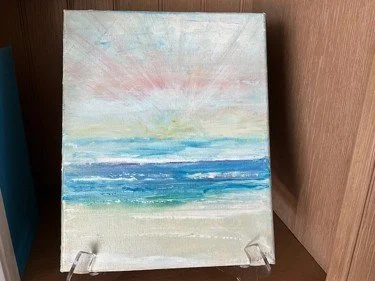
Several years ago, Roger Hutchison introduced us to a new world of spiritual practice. Roger, author and illustrator of The Painting Table, began painting as a child at his grandmother’s kitchen table. Those early experiences are still in his bones, and he continues to paint with the enthusiasm, freedom, and wonder of a child.
That childhood table inspired Roger’s work of bringing painting, prayer, loss, and joy together. Today, he serves as Director of Communications and Family Ministries at Palmer Memorial Episcopal Church in Houston and is sought after as a teacher and retreat leader. Roger’s approach to painting is unusual. He invites us to return to the freedom of childhood and to paint from our imagination without editing, evaluating, or judging what we create.
I remember the first day I attended his class at Kanuga Conferences. Lark had invited him to teach at the Liturgical Arts Conference she directed there. At the beginning of the class, Roger placed blank canvases before us and brought out the paint. After leading us in a short meditation, he told us to begin painting. But one very important thing was missing: he had not given us any paintbrushes.
When we asked where the brushes were, he told us we didn't need them. As I remember his words, he said something like this: “Your painting is already within your body. Your fingers know where to place the paint. They even know which colors belong in your work. Let your body lead your mind and heart.”
At first, the exercise felt awkward—to say the least. I found myself thinking, “How can I paint anything even halfway decent without a brush to put the paint exactly where it needs to go?” But that was Roger’s point. A brush gives us precision and control. It allows the critical mind to direct every stroke and judge every result. Without a brush, we could not depend upon control. We had to trust something deeper. As children, we did not always plan, position, and pinpoint our subject matter. We simply allowed the creative energy within us to flow. We were less concerned with whether the result was “good.” We created because something within us wanted to be expressed.
I believe this is one of the spiritual gifts of artistic expression. Somehow, we just know if soul is in a painting or any artistic expression. It can take us beneath the mind that judges and into the soul that already knows. When, as we did as soul children, we surrender our need to control the outcome, the body leads us to the subject matter, colors, and movements.
After a while, our small class began to get the hang of it. Instead of the silence and quiet anxiety that sometimes fill art classes, the room gradually came alive with laughter and happy chatter. Unexpected works of art flowed from our bare fingers.
Spiritual Practice
Choose an artistic activity—painting, writing, collage, dance, music, gardening, or another form of expression. For fifteen minutes, create without correcting, erasing, or evaluating what emerges. Let your body participate. When you finish, notice the spiritual qualities of your soul that found expression.
Inquiry
What qualities help you recognize that your own creative expression has arisen from the soul?
Prayer
Dear God,
Thank You for Your servant, Roger and for the freedom with which he creates.
Amen