

November 15, 2026
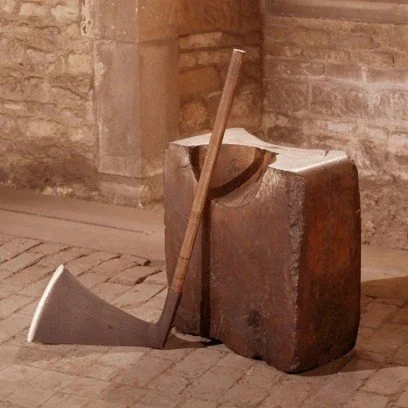
When Trevor and I were young boys, our mother took us to visit our family in England and to see many historical places we had heard about in stories and seen in pictures. One of those places remains vivid in my mind: the Tower of London, which we toured on our first visit to our English family. William the Conqueror built it as a defensive castle, and it was especially captivating to a nine-year-old like me, who had grown up with books and stories about English explorers, castles, drawbridges, knights, royalty, coronations, battles—and executions!
For countless hours, I had played with my Robin Hood action figures and a painted tin castle. From the castle, the Sheriff of Nottingham and his armored knights pursued their nemesis, Robin Hood, and his band of merry men.
Like any child, I began to develop my interior life through play with my toys, action figures, and time in the woods, imagining whatever my mind’s eye could conjure. A tree could become anything I wanted, and my action figures could act out any scene I imagined.
A child may see the glamour, gallantry, remarkable architecture, heroism, and pageantry of history. But on my first visit to the Tower, my body sensed something else: evil and bloody acts that still seemed to linger within its walls. Play, imagination, and fantasy adventures can open a way into the interior life and help develop it. But I learned that places like the Tower could also draw me inward through the dark, brutal, and cruel. The experience left me with images I couldn't unsee and feelings that made me uncomfortable—even scared.
In the Tower were the chopping block and the axes and swords used for beheadings. There were also the torture chambers, and the places where royals and paupers alike were executed. There was also the room where the two young princes, heirs to the throne, were said to have been murdered in their sleep. I remember seeing the narrow walkway along the battlements where Sir Walter Raleigh, a prisoner, walked for exercise during his thirteen-year imprisonment, only to be executed in 1618.
The sights and the guides’ explanations affected me deeply. Being there made me realize that real people had suffered brutality and died violent deaths in that very place. I did not speak aloud about what I felt; the emotions seemed too overwhelming to put into words. So, I turned inward, as many of us do, creating an interior space in which to think about the unspeakable. I imagined myself as the victim, the executioner, and the onlooker. My interior life, like the interior lives of many children, was the inner space where I tried to work out my feelings about all I had experienced.
My interior space developed, enlarged, and became more multi-layered. Later, it was the inner terrain in which I revisited the crucifixion of Jesus as well as many other subjects.
Our interior space can be a place to escape into pleasant fantasy, a place that haunts us from within, or both. Pleasant fantasy is needed, especially in a world that is filled with so much bad news. Pleasant reverie can be sacred space. On the other hand, when what lives inside us haunts us, we can become alienated from our inner being—unless we find ways to understand, work with, and make that space sacred. In sacred space, we can look at all things, with the companionship of God.
How do we make our interior space sacred? We will reflect on this question in tomorrow’s reflection.
Spiritual Practice
Imagine your interior life. What subjects does your interior space hold, turn over, and wonder about? As part of your spiritual formation, describe that space, along with its images and feelings. List as many of the things that remain part of your inner life as you can.
Inquiry
How can the profane be part of our sacred interior life?
Prayer
Dear God,
Bless my interior life, for it is a vital part of my soul.
Amen